
There are herbs whose leaves whisper secrets of ancient rainforests, whose aroma feels like a warm breeze carrying both spice and nostalgia. Damiana is one such plant — a small aromatic shrub with fragrant foliage that has been woven into the healing traditions of the Maya, Aztec, and Indigenous peoples of Central and South America for generations. It grows in sun-dappled scrublands, its pale yellow blossoms opening like tiny beacons, inviting us to explore its spirited medicine
Damiana was beloved by the Aztecs and Mayans, used to treat impotency, increase sexual drive in both men and women, and stimulate the nervous system while promoting relaxation. Traditionally, the fragrant leaves were brewed as a tea and sweetened with sugar or honey to stimulate lovemaking and is featured in Central American mystical folklore for it’s spiritual, feminine powers. It has also been used recreationally in liquor or smoking pipes, giving off a sweet fragrance and reducing anxiety.
Damiana as a tea is a tonic for the kidneys, the sexual organs and the nervous system. It is excellent at balancing the hormones and the emotions and increasing blood flow to the pelvic region. The effect of this tea is definitely more noticeable when one is feeling down, out of sorts, grumpy, angry or upset, giving one a natural feeling of well-being.
Damiana’s voice is warm and enlivening — a tonic that gently invigorates the nervous system and awakens a sense of aliveness in the body and spirit. Its aromatic bitterness tells us it is a herb of digestion, disposition, and desire — a friend to both heart and hearth.
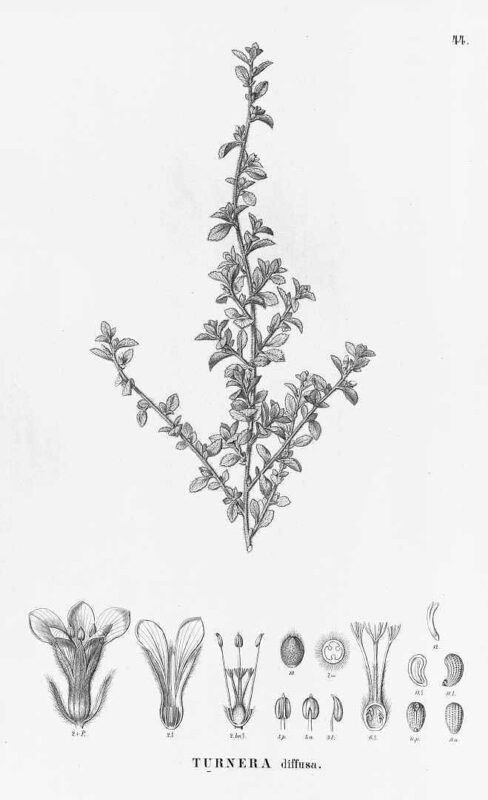
MATERIA MEDICA: DAMIANA
Latin Name: Turnera diffusa
Family: Turnerceae
Parts Used: Above-ground plant
Energetics: Warm, dry, slightly bitter, aromatic, pungent, yang nourishing
Taste: Bittersweet with resinous, uplifting notes
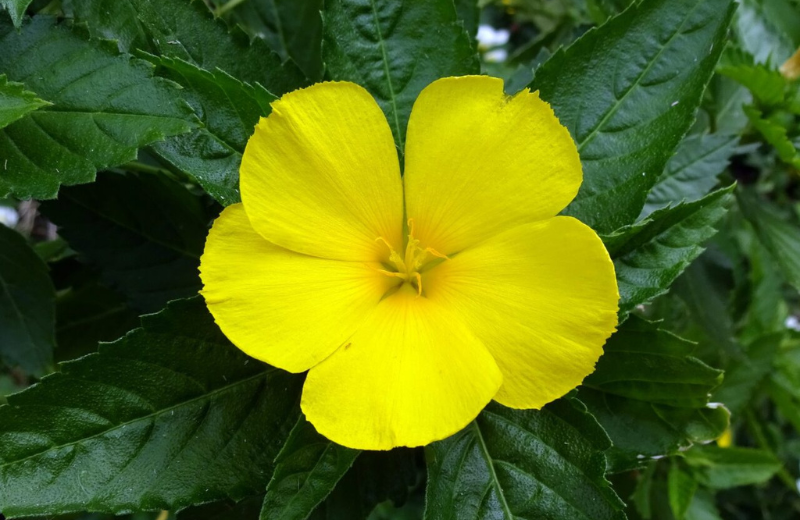
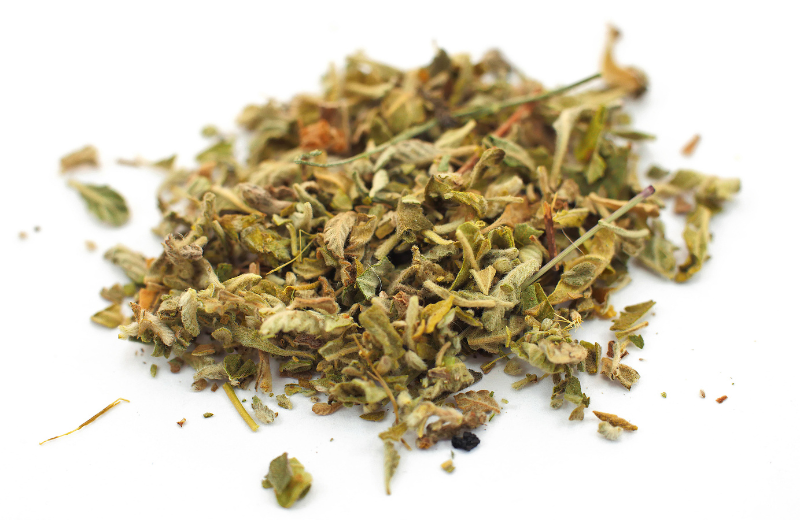
Botanical Description: Damiana is a small shrub with pale green, serrated, wedge-shaped leaves arranged alternately on a short, slender leafstalk. The small, 5-petaled yellow flowers grow in the leaf axils, and produce a small fruit whose taste is said to be reminiscent of fig.
Herbal Actions: Damiana nourished yang, invigorates the brain and nerves, regulates the pituitary gland, and promotes physical endurance. The bitter principle stimulates the nerves and genitals and allows nerve messages to more readily spread throughout the body.
- Anti-catarrhal
- Antidepressant
- Anti-inflammatory
- Anxiolytic
- Aphrodisiac
- Astringent
- Balances hormones
- Nervine
- Reproductive tonic
- Stimulant
- Diuretic
This is a plant that doesn’t rush — its influence is more like a soft tide rising: warming, welcoming, and steady rather than abrupt or overwhelming.
Key Constituents
Damiana’s chemistry is diverse and intriguing. Its leaves are rich in:
- Volatile oils: aroma-rich compounds that enliven the senses and may support circulation.
- Flavonoids and polyphenols: including apigenin, known for mild anxiolytic and antioxidant effects.
- Bitter principles: contributing to digestive and detox support.
- Glycosides, sterols, tannins: each adding layers to its traditional uses.
Together these constituents create a synergistic tapestry of biochemical influence — an herb whose whole is greater than the sum of its parts.
Traditional & Folk Uses
Across many Indigenous cultures in the Americas, Damiana was used lovingly and holistically:
- Sacred tea for the heart and spirit: brewed sweetly with honey or sugar and shared in gatherings.
- A tonic of desire: especially in courting and ceremonial contexts, Damiana was said to open the body’s natural longing and expression of love.
- A calm for nervous agitation: smoked or infused to ease tension, offering a gentle and grounding warmth.
- Restorative for the body: tonic for the reproductive and urinary systems, and a supporter of general wellbeing.
Modern Uses:
- Nervine tonic & mood support: soothing anxious tension, uplifting spirits.
- Mild antidepressant: supports emotional resilience in times of heaviness.
- Aphrodisiac & reproductive tonic: encourages libido and vitality in both men and women.
- Digestive & carminative: supports digestion and gentle elimination.
- Mild diuretic: encouraging gentle movement through the kidneys and urinary system.
- Stimulant & tonic: invigorates the nervous system and may be mildly uplifting
Preparation:
Damiana is a wonderfully versatile herb that lends itself well to your particular favorite way of ingesting herbs. It is often used in herbal smoking mixtures, as a tea, tincture, and infusions in wine, brandy, or tequila.
Dosing:
- Tea: 1 tsp damiana in 1 cup boiling water, steep 10-15 min, take 3x per day.*
- Tincture: 1 tsp per day. **