
There is a moment each spring when the world seems to inhale.
Tender shoots emerge from the earth, birds return to the skies, and warm breezes carry the scent of new life across the landscape. After the stillness of winter, movement returns to the natural world. Growth accelerates, possibilities unfold, and we are reminded that change is woven into the fabric of existence.
Air is perhaps the most elusive of the elements. We cannot hold it in our hands, yet we experience its presence constantly—in every breath we take, every wind that brushes against our skin, and every storm that reshapes the landscape.
Within elemental herbalism, air represents movement, communication, inspiration, and evolution. It teaches us how to remain flexible, curious, and open to transformation.
The elements are the bones of our natural world—that from which everything is made, a beautiful dance and song created through their interaction.
Air is never static. It moves between seasons, carries seeds across great distances, shapes weather patterns, and reminds us that life itself is in constant motion. The plants that embody air teach us how to breathe deeply, adapt gracefully, and find clarity amidst change.
On the Energetics of Air
The energies of air correspond with movement, clarity, evolution, and change. It is that power that cannot be seen but yet can be felt when the wind whips our hair, or calls in the thunderstorm.
In our bodies, air is sacred breath, it is vitality and life force. When in balance, we feel calm, grounded, and regulated. The energy of air can be witnessed in the movement of the wind. It can be soft and subtle, a gentle tickling breeze, or a violent, ripping wind that is infused with chaos and can be quite destructive. When out of balance in our body, we may experience dryness, and our spirit may feel aloof, adrift, and without a tether to keep us rooted.
Air is the element of movement. It carries seeds across great distances, shapes weather patterns, and brings life-giving breath to every living being. Though invisible, its presence is constantly felt in the rustling of leaves, the migration of birds, and the changing of the seasons.
Spring is often associated with air because it is a season of awakening and emergence. After winter’s stillness, movement returns to the landscape. Buds unfurl, pollinators emerge, and the world seems to take a collective breath as life begins anew.
Air reminds us that growth requires movement and that transformation often begins with a single breath.

Photo by Marc Kleen on Unsplash
Air is never a constant, always shifting and moving, and can be an ally for when we may feel stuck. It can help remind us that change is not only inevitable, but often necessary, for without change we cannot evolve. May we find surrender in allowing the wind to carry us like a grain of sand across the desert, invoking our curiosity and wonder at the adventure that is life.
Air is deeply connected to communication, inspiration, thought, and breath. It governs the movement of energy throughout the body and serves as a bridge between our inner and outer worlds.
When balanced, air helps us feel clear-minded, adaptable, curious, and connected. It allows us to communicate our truth, embrace change, and move through life with a sense of openness and possibility.
The simple act of conscious breathing can be one of the most profound ways to reconnect with this element and return ourselves to the present moment.
When air becomes excessive, we may feel scattered, restless, anxious, or untethered. Thoughts may race, making it difficult to focus or feel grounded. Just as a strong wind can create turbulence, too much air can leave us feeling disconnected from our center.
When deficient, we may experience stagnation, resistance to change, or a feeling of being stuck in familiar patterns. In these moments, air can remind us of the importance of movement, curiosity, and fresh perspective.
Through breathwork, time in nature, and the support of plant allies, we can cultivate a healthier relationship with the element of air.
Herbal Allies of Air
The season that aligns with the energy of air is spring. It is a time of intense growth, re-emergence, and the time of a deep, collective inhale that comes with the first breath of birth. It is embodied by the way a seedling emerges from the darkness below the soil, reaching tall for the clouds and the sky above.
Herbs that have an affinity for air can be identified by the way this element manifests in their form. They often tend to be tall and thin, their leaves sparse and open to allow the movement of air through them. They also often tend to be hollow in their stem, as if serving as a temple to this element within their being. Many of these herbs also are aromatic, bringing a sweet aroma and scent into our being as we share breath with them.
Herbs of air include:
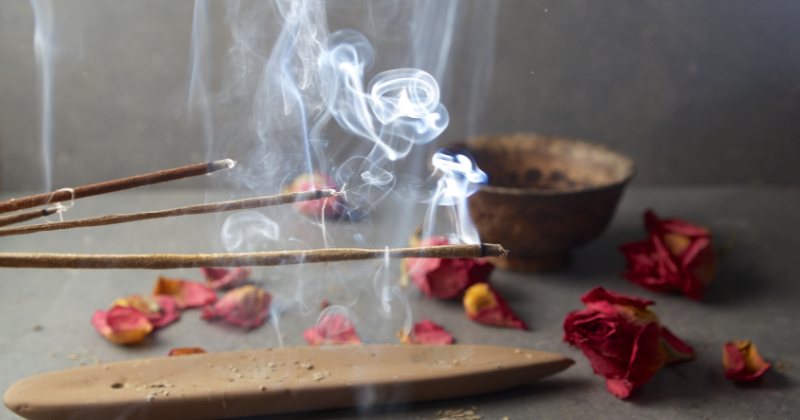
Sacred Smoke Herbs: These herbs are aromatic herbs that hold deep reverence and wisdom, and are often used in ritual or intentional cleansing. Alchemizing with our intentions, they have the ability to raise or expel energy. They also interact with our nervous system, helping draw us into a state of sacred space, deeply grounding us, and helping us to pass through the threshold into the mystical.
Sacred smoke herbs include Lavender, Mugwort, Juniper, Sage, Vervain, and Rosemary, among many others. Herbs also included in this category are herbs that are deeply sacred to Indigenous communities who have long tended to them with profound care and stewardship, but have become endangered, commodified, and overharvested including White Sage and Palo Santo. Magic can happen when we reconnect to the herbs that were used within our own lineage and ancestry, but if either of these herbs call to you, please use deep care these herbs should only be sourced ethically and sustainably (or grown yourself in your garden!) and with respect to Indigenous communities.
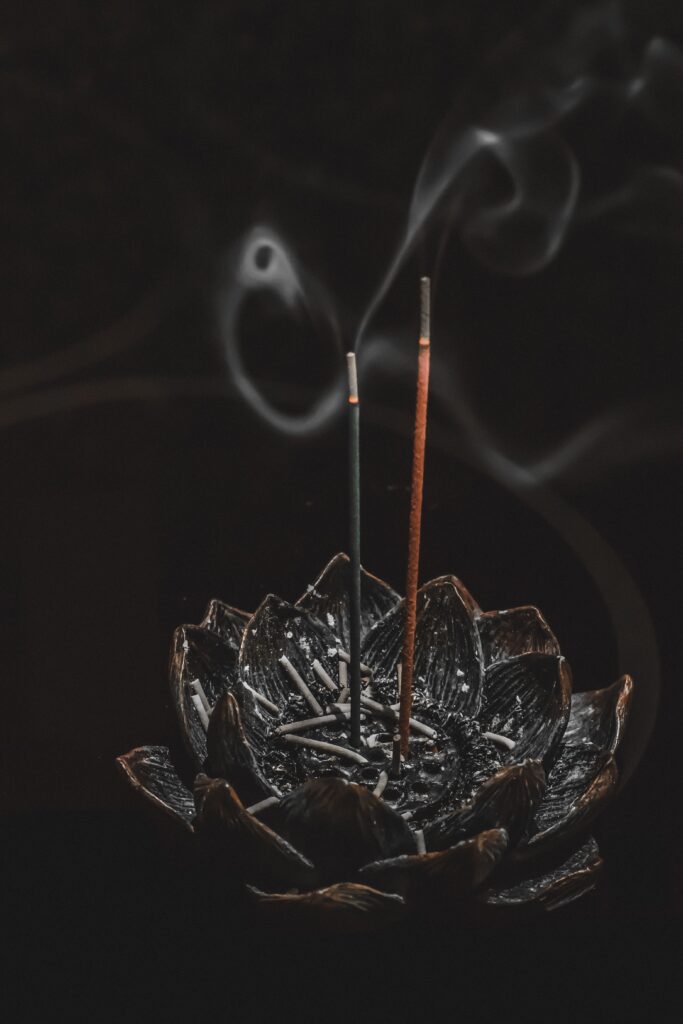
Photo by David Brooke Martin on Unsplash
Yarrow: This gorgeous and abundant herb that resembles a cloud is incredibly multi-functional. Its thin stem and wispy leaves are an ode to the element of air, and can help provide relief for our lungs when we are experiencing a dry, scratching cough that seems to persist. Deeply aromatic, this herb can also be used in incense and sacred smoke. Yarrow can also bring relief to skin that is irritated or inflamed, particularly due to dryness.
Mullein: This herb has an affinity for our respiratory system and is a profound ally for the breath. While a larger plant, this herb still embodies many of the characteristics commonly found in air-element plants. It is tall, with a thin stem, and its leaves are broad. This herb, which is abundant (and can be invasive in some environments), is an incredible ally for lung support when the air is full of pollutants and particulate matter, much like what we see in an area impacted by a large wildfire. This herb has properties that are soothing and cleansing to the lungs, including being an expectorant, helping us to dislodge materials that are disruptive to our breathing such as mucus. Mullein also serves as a beautiful base for an herbal smoking blend, which is another way to work with herbs corresponding with air. An alternative to tobacco, herbal smoking blends can have benefits, including calming or energizing effects when inhaled.
Consider your relationship with change.
Where in your life are you being invited to move, grow, or evolve? Are there old stories, beliefs, or habits that are ready to be carried away by the wind?
Take a few slow breaths and notice what arises. Air teaches us that we do not need to force transformation—we simply need to remain open to it.
May the winds bring clarity to your mind and spaciousness to your spirit. May each breath remind you of your connection to the living world, and may the plants of air guide you toward curiosity, adaptability, and trust in the unfolding journey ahead.
Browse by category
- Aphrodisiacs
- Aromatherapy
- Astrology & Magic
- Ayurdeva
- Botany Foraging & Gardening
- Chakras
- Digestion
- Earth Connection
- Energetics
- Flower & Gem Essences
- Folk Traditions
- Herbalism & Holistic Health
- Immune Support
- Materia Medica
- Mushrooms
- Nutrition
- Seasonal Living: Autumn
- Seasonal Living: Moon Cycle
- Seasonal Living: Spring
- Seasonal Living: Summer
- Seasonal Living: Winter
- Skin & Body Care

Don’t Miss a Thing!
Enter your email below to be the first to know about sales, new products and tips for taking care of your pieces.