

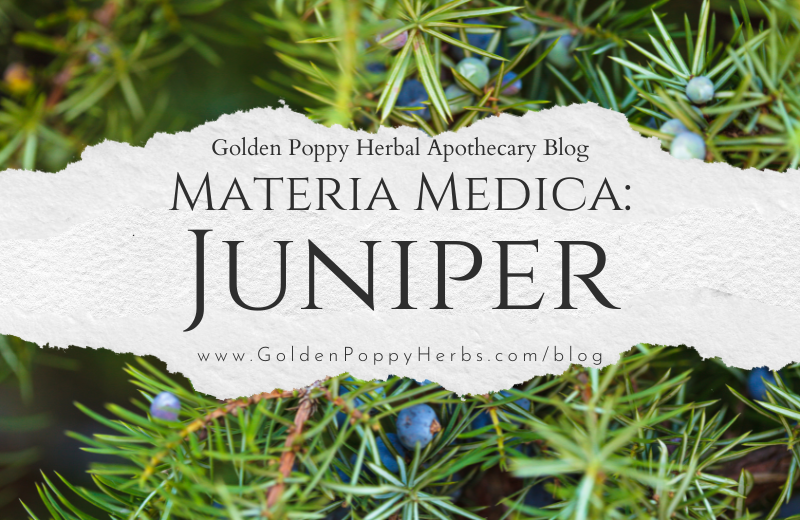
Juniper is a plant of wind-scoured hillsides and high, open places. It thrives where conditions are harsh—where soil is thin, winters are long, and few plants choose to linger. Evergreen and aromatic, juniper holds its shape through cold and drought alike, offering a medicine shaped by endurance, clarity, and quiet strength.
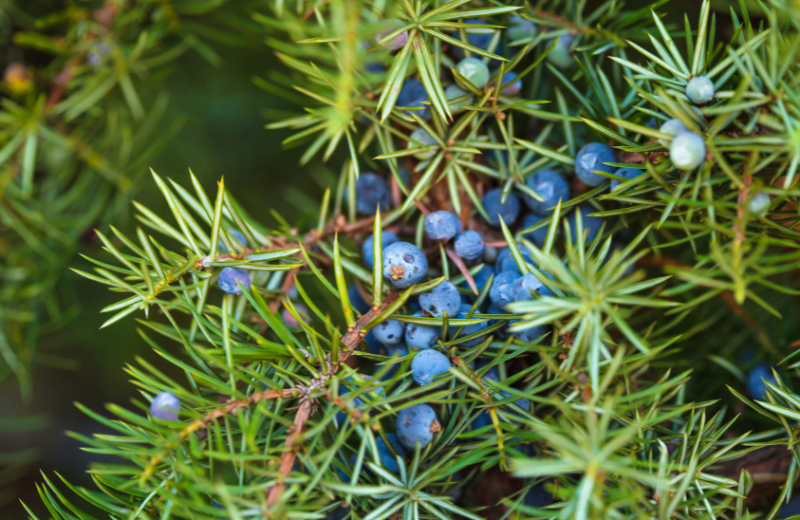
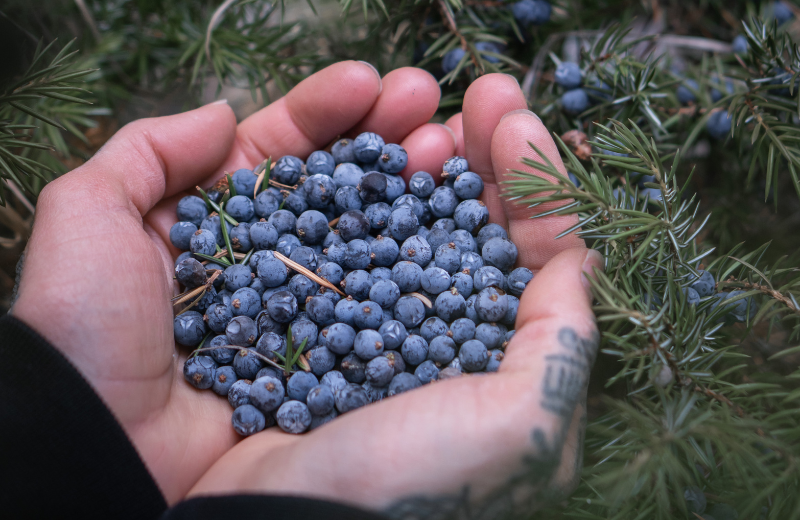
The berries, which take two to three years to fully ripen, deepen from green to a dusky blue-black, gathering sunlight, resin, and time. When crushed, they release a sharp, piney scent—bright, bracing, and unmistakably alive. This is not a soft or meandering plant. Juniper’s medicine is focused and purposeful, clearing what is stagnant and encouraging movement where things have become heavy, cold, or stuck.
Across cultures, juniper has been valued not only as a physical medicine but as a plant of purification and protection. Its branches have been burned as smoke to cleanse spaces, its berries carried as charms, and its medicine taken sparingly to restore vitality and flow. Juniper reminds us that cleansing is not about depletion, but about making space for what is essential.
Botanical Overview
-
Botanical name: Juniperus communis
-
Family: Cupressaceae
-
Parts used: Ripe berries (modified cones); occasionally needles or wood for external or ceremonial use
-
Growth habit: Low-growing evergreen shrub or small tree with needle-like leaves
-
Native range: Widespread throughout the Northern Hemisphere, particularly in rocky, mountainous, and open landscapes
Juniper grows slowly and deliberately, often in marginal soils where few other plants can establish. Its berries mature over multiple seasons, often appearing alongside last year’s and the year before’s growth—an embodied reminder of patience and long cycles.
Important note: Not all juniper species are appropriate for internal use. Juniperus communis is the primary species used in Western herbalism. Proper identification is essential before harvesting or medicine making.
Energetics & Taste
-
Energetics: Warm, dry, stimulating
-
Taste: Bitter, pungent, resinous, aromatic
Juniper’s warmth penetrates deeply, cutting through cold and damp conditions in the body. Its dryness helps counter excess moisture and congestion, while its pungency brings circulation and alertness. This makes juniper especially suited for people and patterns marked by sluggishness, heaviness, or chill—both physically and energetically.
Herbal Actions
-
Diuretic
-
Carminative
-
Digestive stimulant
-
Antimicrobial
-
Circulatory stimulant
-
Alterative (traditional use)
These actions reflect juniper’s primary gift: movement. It moves fluids, stimulates digestion, encourages circulation, and clears stagnation.
Traditional & Clinical Uses
Urinary & Fluid Balance
Juniper has long been used as a stimulating diuretic, supporting healthy urinary flow and the body’s ability to release excess fluid. It is particularly suited for patterns of dampness or stagnation, where there is a sense of heaviness, bloating, or slow elimination.
Rather than gently nourishing the kidneys, juniper works by encouraging action—making it best suited for short-term use and not for chronic deficiency states.
Digestive Support
As a bitter and aromatic plant, juniper stimulates digestive secretions and warms the digestive tract. It has traditionally been used for gas, bloating, and sluggish digestion, especially when symptoms worsen with cold foods, cold weather, or damp conditions.
Juniper’s digestive support is both physical and sensory—the scent alone can awaken appetite and digestive readiness.
Circulation & Warming
Juniper supports circulation by gently stimulating blood flow and warming the periphery. It has been used traditionally to bring warmth to cold hands and feet and to support overall vitality during long winters or periods of exhaustion.
Purification & Protection
Juniper’s role as a plant of purification extends beyond the physical body. Burning juniper branches or berries as smoke medicine has been practiced across Europe, Asia, and North America to cleanse spaces, protect against illness, and mark ritual transitions.
This use speaks to juniper’s broader signature: clearing what no longer serves, fortifying boundaries, and creating space for renewal.
Constituents
Juniper berries contain a range of volatile oils and phytochemicals, including:
-
Terpinen-4-ol
-
α-pinene and β-pinene
-
Sabinene
-
Flavonoids
-
Phenolic compounds
These constituents contribute to juniper’s antimicrobial activity, stimulating diuretic effects, and digestive support.
Preparations
-
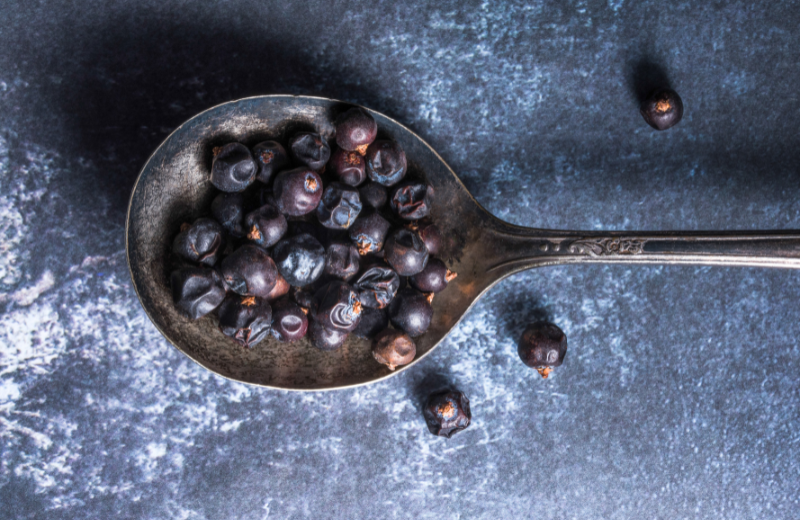
Tea (infusion or light decoction): Lightly crushed berries steeped briefly
-
Tincture: Commonly used for digestive and urinary support
-
Culinary use: Berries used as a spice, particularly in savory dishes and traditional gin
-
Smoke medicine: Dried branches or berries burned ceremonially
Because of its strength, juniper is best used intentionally and for short periods, rather than as a daily tonic.
Safety & Contraindications
Juniper is a powerful plant ally and should be approached with respect.
-
Avoid internal use during pregnancy and breastfeeding
-
Avoid in cases of kidney inflammation, infection, or chronic kidney disease
-
Not intended for long-term or high-dose use, as prolonged stimulation may irritate the kidneys
-
Use only properly identified, appropriate species
When used appropriately and sparingly, juniper can be a valuable ally—but it is not a plant for casual or prolonged use.
Juniper teaches discernment. It asks us to notice where things have become heavy, congested, or stagnant—and to clear with intention rather than force. Its medicine is bracing, honest, and clarifying, reminding us that vitality often returns when we create space for it to move.
In this way, juniper stands as a guardian of thresholds, offering its evergreen strength to those ready for renewal.
Sources
- The Herbal Academy. Juniper Monograph. Herbarium. Accessed January 13, 2026. https://herbarium.theherbalacademy.com/monograph/juniper/
- Rowan & Sage Community. Juniper Materia Medica. Accessed January 13, 2026. https://community.rowanandsage.com/c/materiamedica/juniper
- Hoffmann D. Medical Herbalism: The Science and Practice of Herbal Medicine. Rochester, VT: Healing Arts Press; 2003.
- Mills S, Bone K. Principles and Practice of Phytotherapy. 2nd ed. London: Churchill Livingstone; 2013.
- Drugs.com. Juniper: Uses, Benefits, and Safety. Accessed January 13, 2026. https://www.drugs.com/npp/juniper.html
- Juniper Medicine for Winter Solstice Season — Rowan + Sage. Accessed January 13, 2026. https://rowanandsage.com/blog/2018/31/12/plant-profile-juniper
- European Union herbal monograph on Juniperus communis L., galbulus. Accessed January 13, 2026. https://www.ema.europa.eu/en/documents/herbal-monograph/final-european-union-herbal-monograph-juniperus-communis-l-pseudo-fructus-galbulus-revision-1_en.pdf
- Juniper Uses, Benefits & Dosage. Drugs.com. Accessed January 13, 2026. https://www.drugs.com/npp/juniper.html
- Juniper external safety and renal caution. eFlora.neocities.org. Accessed January 13, 2026. https://eflora.neocities.org/Juniperus%20Sp
- Plants For A Future. Juniperus communis. Accessed January 13, 2026. https://pfaf.org/user/Plant.aspx?LatinName=Juniperus+communis
Browse by category
- Aphrodisiacs
- Aromatherapy
- Astrology & Magic
- Ayurdeva
- Botany Foraging & Gardening
- Chakras
- Digestion
- Earth Connection
- Energetics
- Flower & Gem Essences
- Folk Traditions
- Herbalism & Holistic Health
- Immune Support
- Materia Medica
- Mushrooms
- Nutrition
- Seasonal Living: Autumn
- Seasonal Living: Moon Cycle
- Seasonal Living: Spring
- Seasonal Living: Summer
- Seasonal Living: Winter
- Skin & Body Care
Don’t Miss a Thing!
Enter your email below to be the first to know about sales, new products and tips for taking care of your pieces.